Production insight, earlier.

Sourcing and machining routes

Sourcing machined parts: from a drawing to an orderWatch the full routeHow a machined part is made: from material to inspectionWatch the full route

Sourcing solution

Seven stops between a drawing and an order. Each island shows the usual way and what AnvilQ does at that stop, with partner suppliers in Taiwan.

1. Start from the drawing

Stop 1 of 7 · AnvilQ helps here

You have a drawing and need a number to plan with.

The usual way

A budget number usually means sending the drawing out and waiting for quotes to come back.

With AnvilQ

Upload a PDF drawing and the quantity. AnvilQ compares your part with production data from real supplier quotations and gives you a cost reference you can plan with.

A reference is an AI-assisted estimate for planning, not a quotation.

Create a free account

2. Find suppliers

Stop 2 of 7 · AnvilQ helps here

You need manufacturers who can make this kind of part.

The usual way

New suppliers come from contacts, directories and trade shows, one enquiry at a time.

With AnvilQ

Your request goes to AnvilQ’s partner suppliers: machined-parts manufacturers in Taiwan with long experience supplying leading international companies.

You decide which drawings to upload. Uploaded drawings are made available to AnvilQ’s suppliers for quotation and manufacturability work, so upload only what you are entitled to share.

Create a free account

3. Check suppliers

Stop 3 of 7 · Not open yet

Before you rely on a new supplier, you want to know what stands behind them.

The usual way

Checking a new supplier’s equipment, capacity and quality system takes visits and time.

Planned

Planned: show how far each partner supplier has been verified, and leave the judgement to you.

This stop is not open yet.

4. Send the RFQ

Stop 4 of 7 · AnvilQ helps here

The enquiry goes out, and the waiting starts.

The usual way

Quotes can take days or weeks. Small batches and early-stage enquiries often get little attention.

With AnvilQ

Send an RFQ to partner suppliers from one place when the project is ready, and plan with your cost reference while they prepare their quotes.

Formal prices come from suppliers through RFQ.

Create a free account

5. Judge the quotes

Stop 5 of 7 · AnvilQ helps here

Quotes arrive. Is the price fair?

The usual way

Quotes come back one by one, and without a second reference it is hard to tell whether a price is fair.

With AnvilQ

Each partner supplier sends its own quote. You compare them yourself, with a reference drawn from real supplier quotations as a second point of view before you negotiate.

References are compared against AnvilQ’s supplier quotation database, not a generative price guess.

Create a free account

6. Manufacturability

Stop 6 of 7 · AnvilQ helps here

Can the part be made as drawn?

The usual way

Manufacturability feedback often arrives late, after prototyping or tooling has started.

With AnvilQ

Request DFM feedback from a supplier before prototyping or tooling, and pass it to your design engineer.

Design for manufacturing shows how each process works and what designers should allow for.

Open design for manufacturingSeven process islands for design engineersCreate a free account

7. Award and order

Stop 7 of 7 · Directly with your supplier

You choose the supplier and place the order.

The usual way

After a long search, the working relationship with a new supplier starts from zero.

With AnvilQ

AnvilQ is formed by its partner suppliers, so you work directly with the manufacturer you chose, and the reference, quote and feedback you gathered here carry into the order.

Order, delivery and payment terms are agreed between you and the supplier.

Design for manufacturing

Seven process islands, from material to inspection. Pick a part type to see which stops its route takes.

Shaft route

  1. Materials
  2. Forging & Casting (optional)
  3. CNC Turning
  4. CNC Milling (optional)
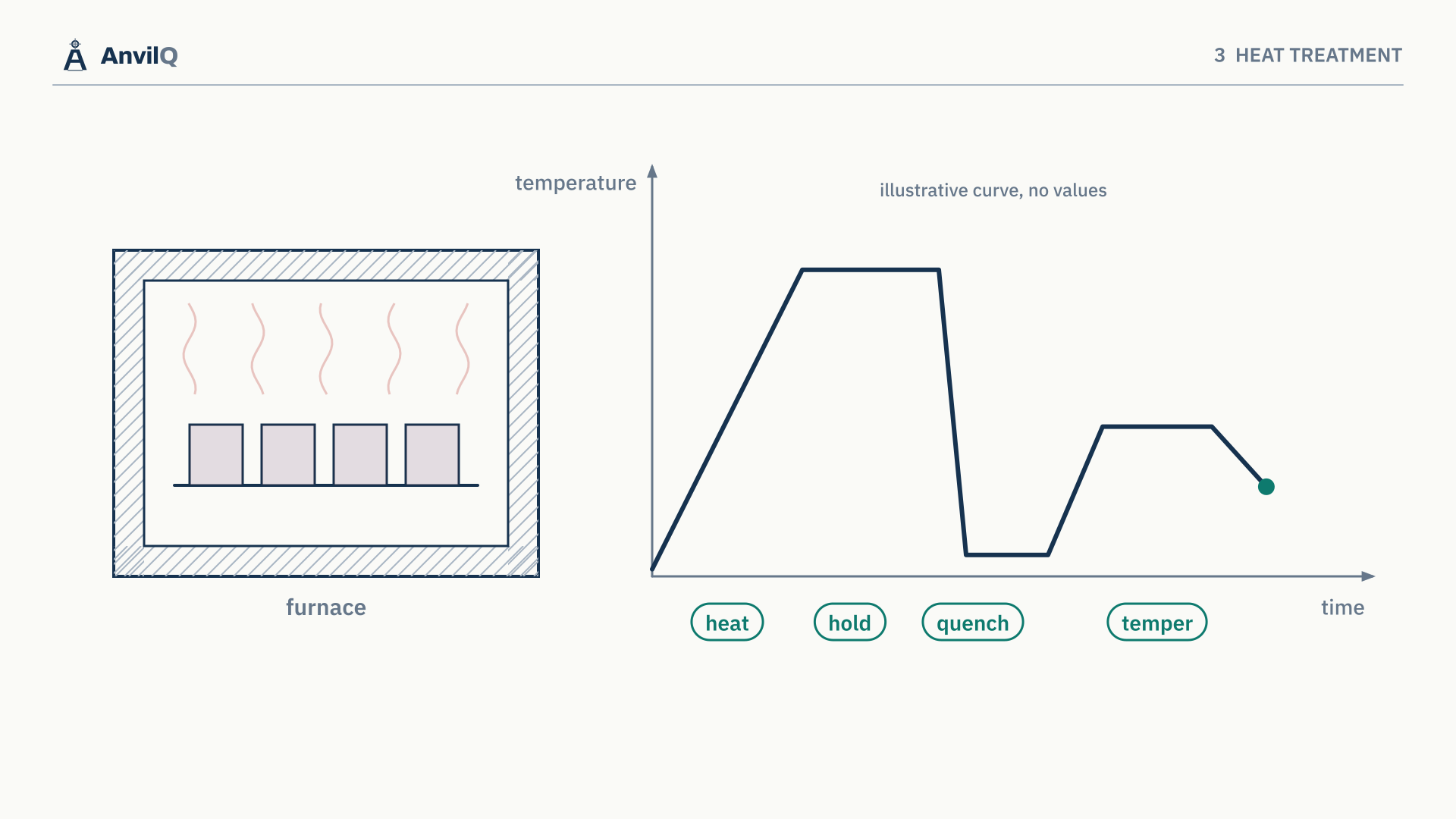
  5. Heat Treatment (optional)
  6. Surface Treatment (optional)
  7. Quality Inspection
  • With heat treatment, critical diameters are often finished afterwards.
  • Bar supplied in the hardened and tempered condition skips the heat-treatment stop.
  • This is a common order, not the only one. The route depends on the part.

Housing route

  1. Materials
  2. Forging & Casting (optional)
  3. Heat Treatment (optional)
  4. CNC Milling
  5. Surface Treatment (optional)
  6. Quality Inspection
  • Cast housings pass the forming island; housings milled from block skip it.
  • Aluminum castings are often heat treated, and castings stress relieved, before machining.

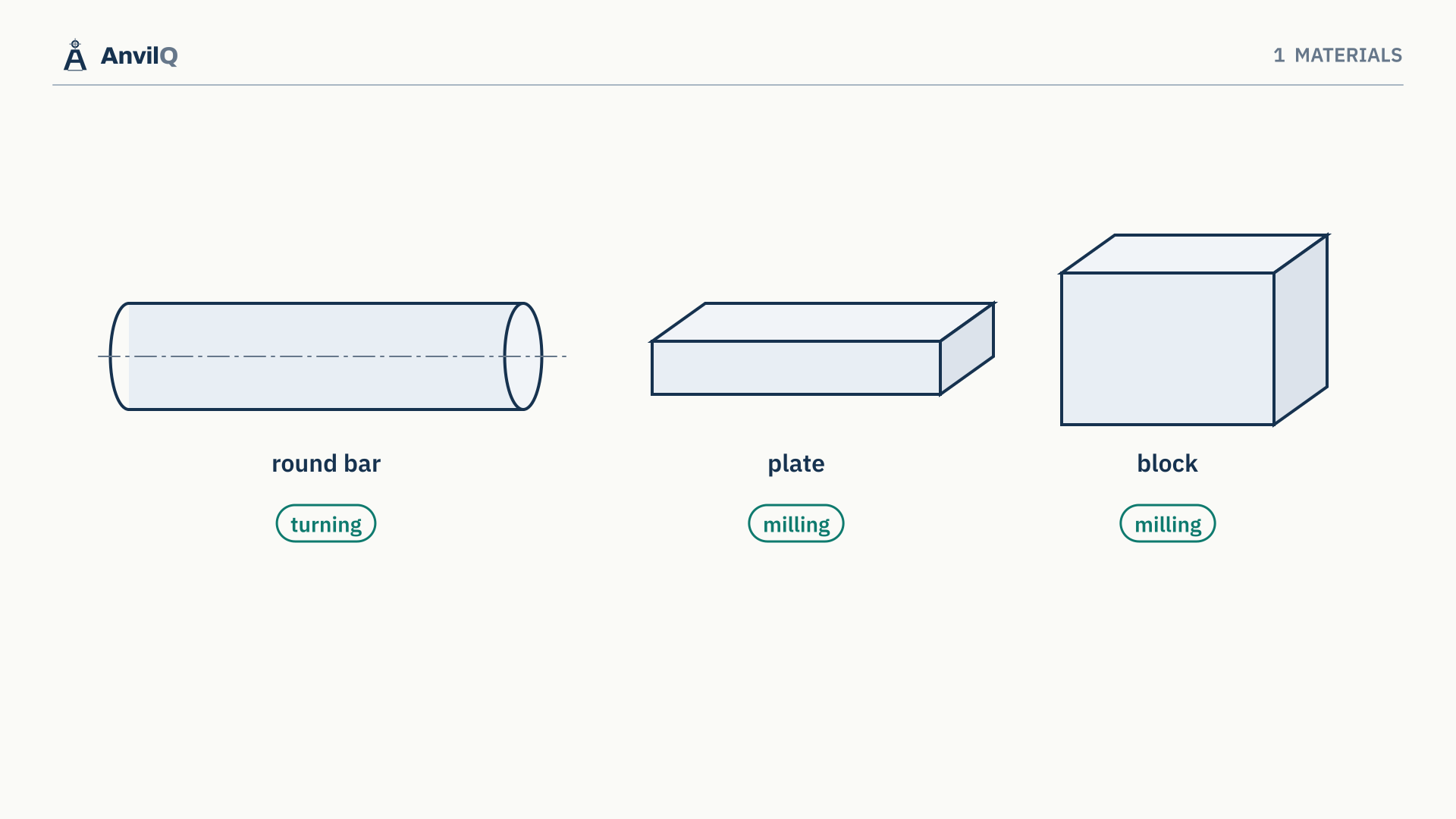
1. Materials

Island 1 of 7

Where the route starts.

Key points

  • Most machined parts start as bar, plate or block, or a forged or cast blank.
  • The material affects machinability, hardening and suitable surface treatments.
  • Stock is cut with extra material so the surfaces to be machined clean up fully.
Process sketchMaterials process sketch
Create a free account

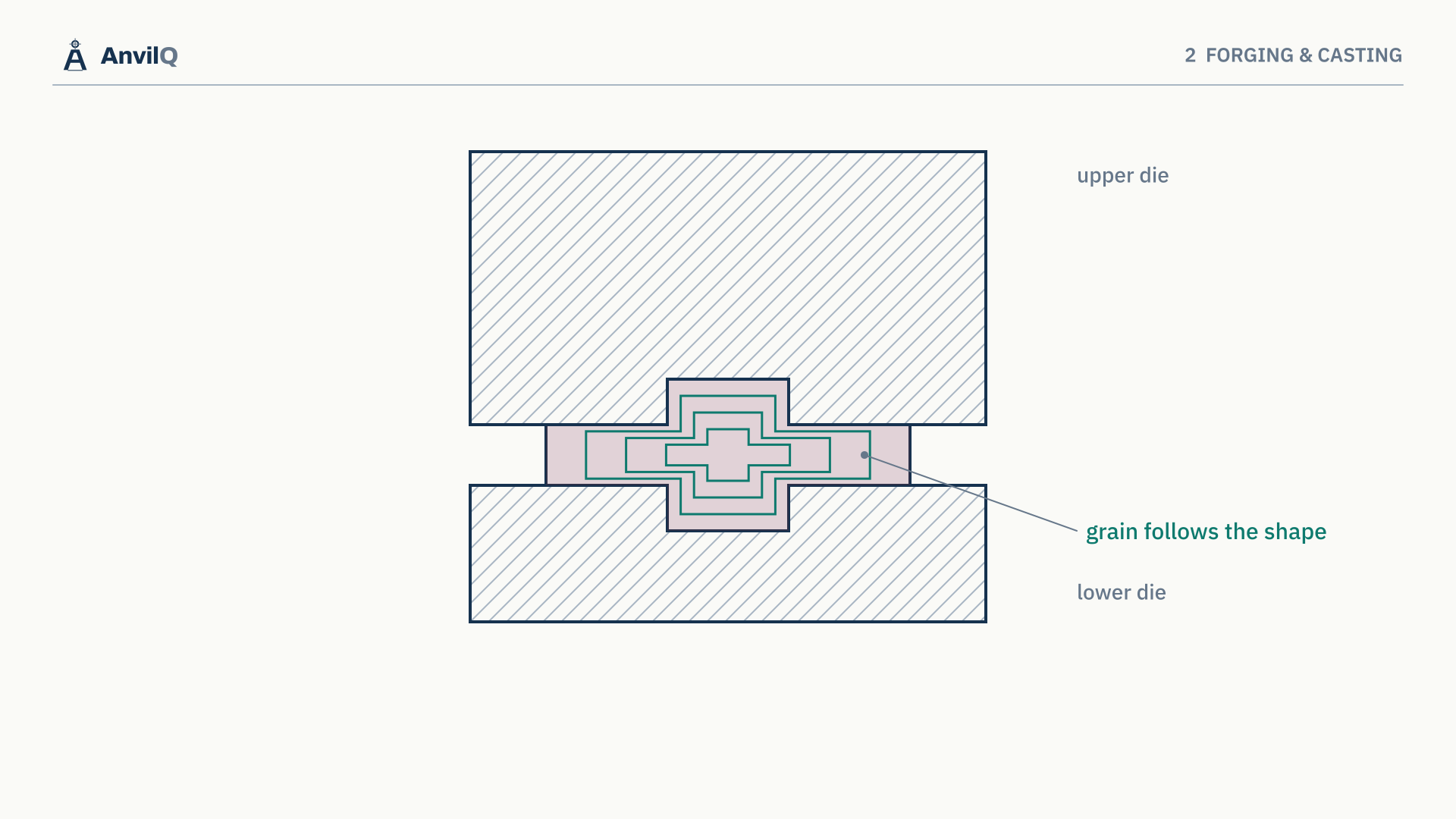
2. Forging & Casting

Island 2 of 7

Giving a part its rough shape before machining.

Key points

  • Forging presses metal, usually heated, between dies; grain flow follows the shape.
  • Casting fills a mold with molten metal; it suits complex shapes and internal cavities.
  • Tight tolerances and fit surfaces usually come from machining afterwards.
Process sketchForging & Casting process sketch
Create a free account

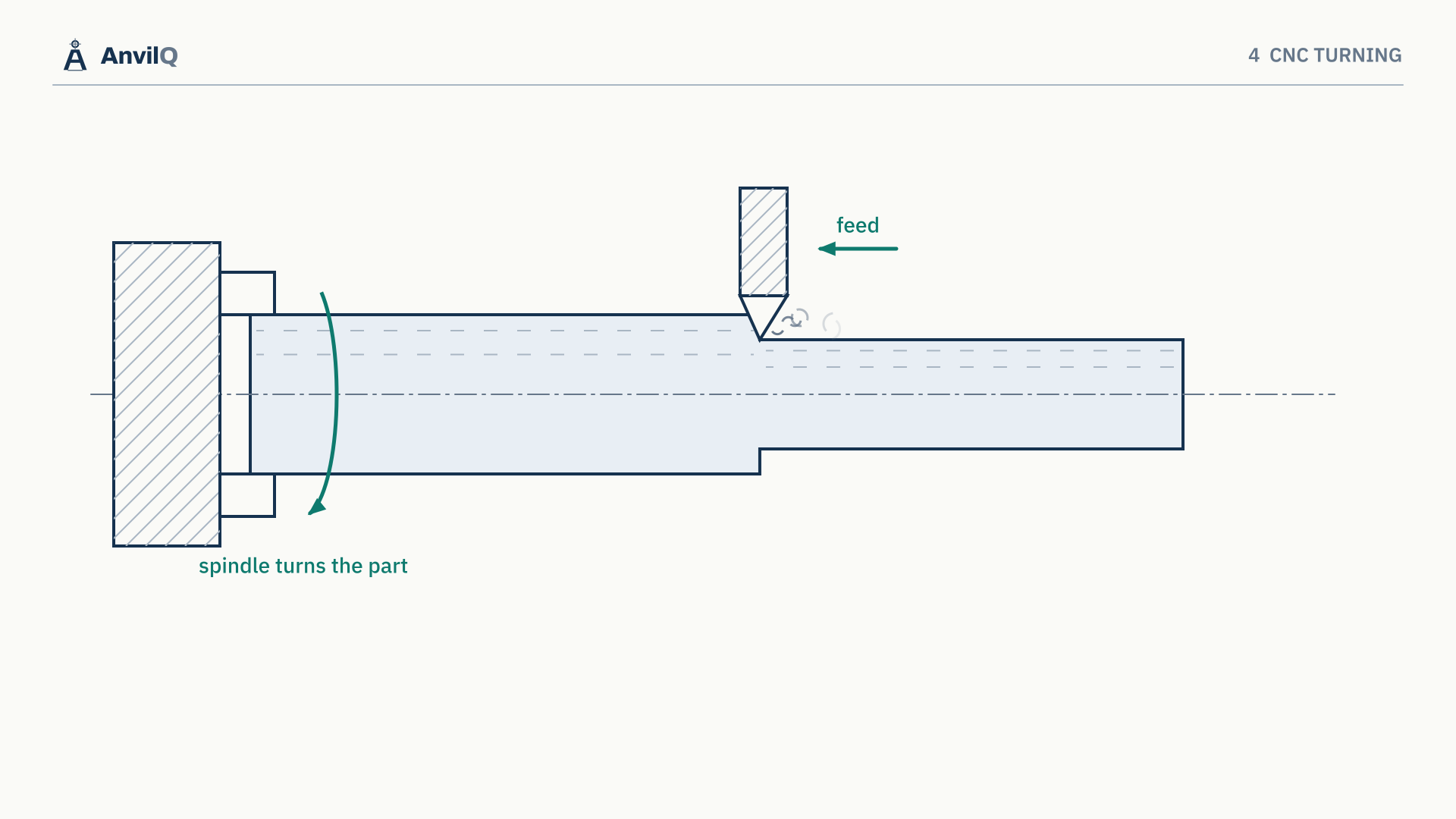
4. CNC Turning

Island 4 of 7

How parts that are round in cross-section are made.

Key points

  • The workpiece spins; the tool moves along it.
  • Facing and center drilling on the same axis.
  • Off-axis features need milling: on a lathe with live tools, or as a separate step.
Process sketchCNC Turning process sketch
Create a free account

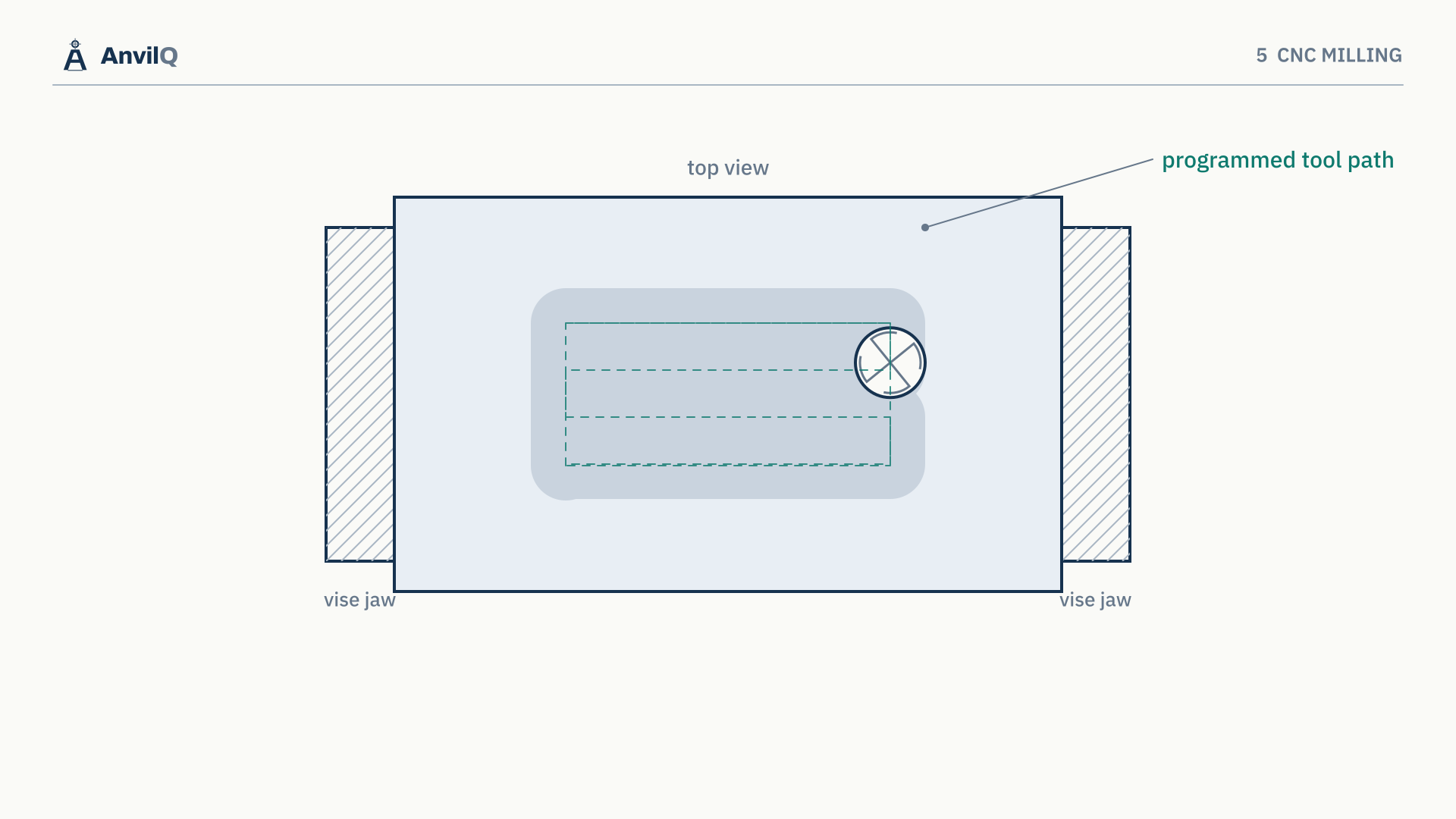
5. CNC Milling

Island 5 of 7

Cutting faces, pockets, slots and holes with a rotating cutter.

Key points

  • The part is clamped and the cutter moves relative to it along a programmed path.
  • One setup keeps feature positions together.
  • Inside corners keep the cutter radius; allow a radius or a corner relief.
Process sketchCNC Milling process sketch
Create a free account

6. Surface Treatment

Island 6 of 7

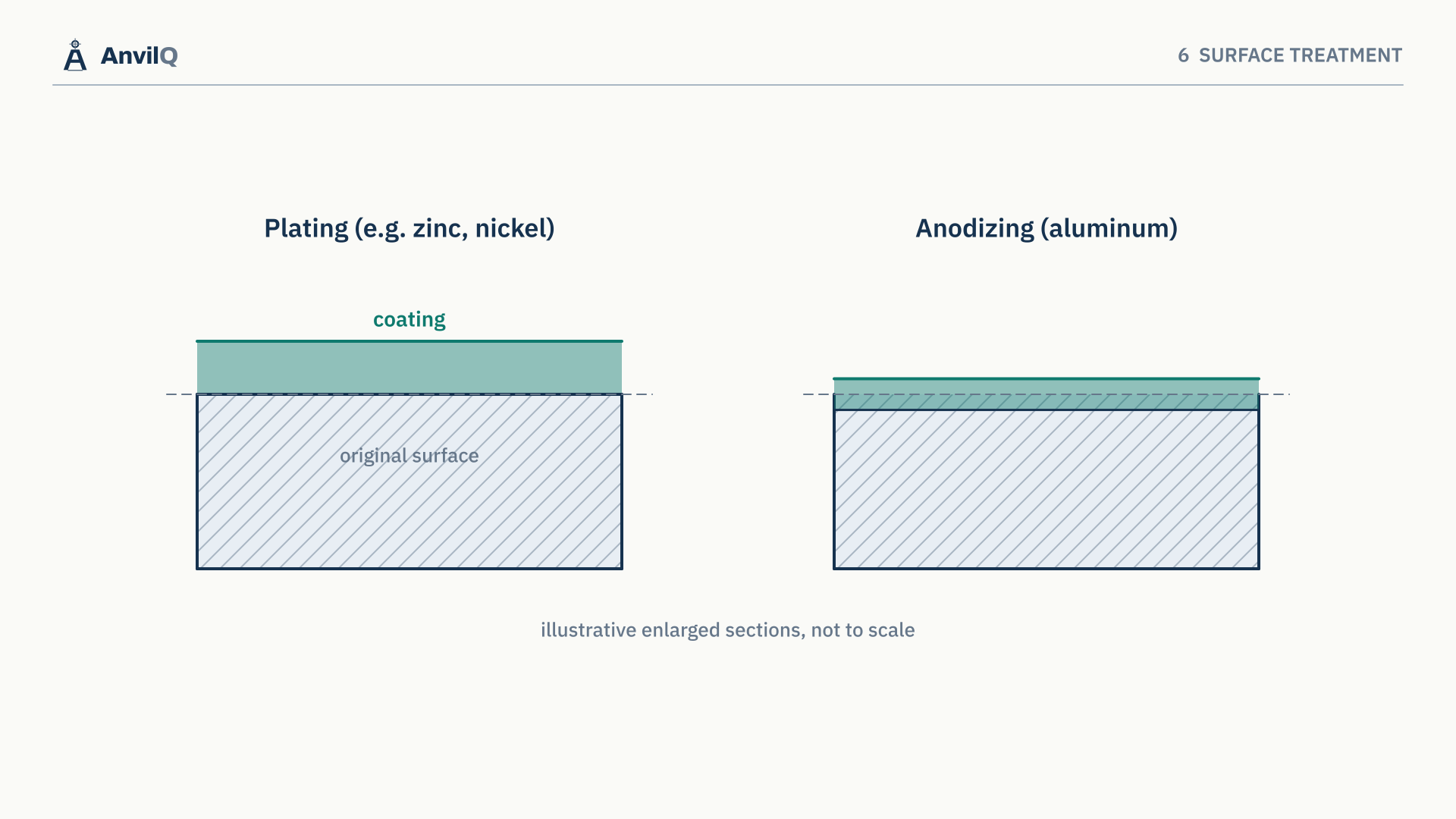
Protecting a part and changing how its surface behaves.

Key points

  • Plating grows outward; anodizing grows partly into the base metal.
  • Fit sizes must allow for the coating.
  • State before or after treatment on the drawing.
Process sketchSurface Treatment process sketch
Create a free account

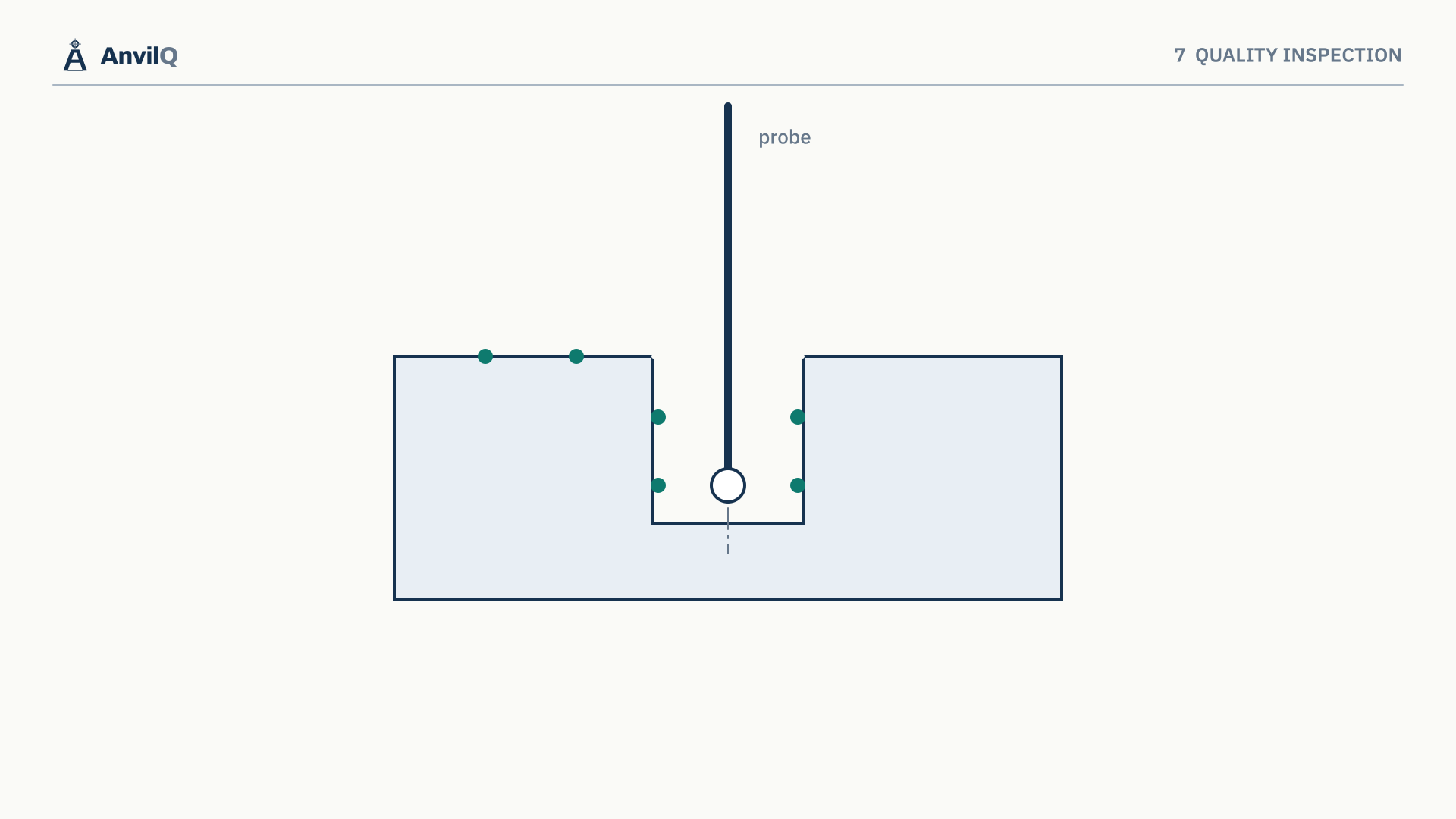
7. Quality Inspection

Island 7 of 7

Checking the finished part against the drawing.

Key points

  • Hand gauges at the machine; CMM for positions and form.
  • Measured points are fitted to features and compared with the drawing or model.
  • Agree datums and measuring conditions before production.
Process sketchQuality Inspection process sketch
Create a free account