
Process island: Quality Inspection
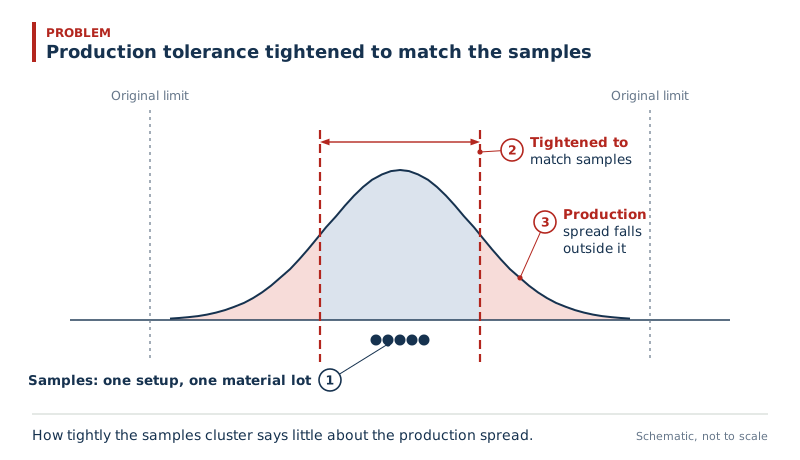
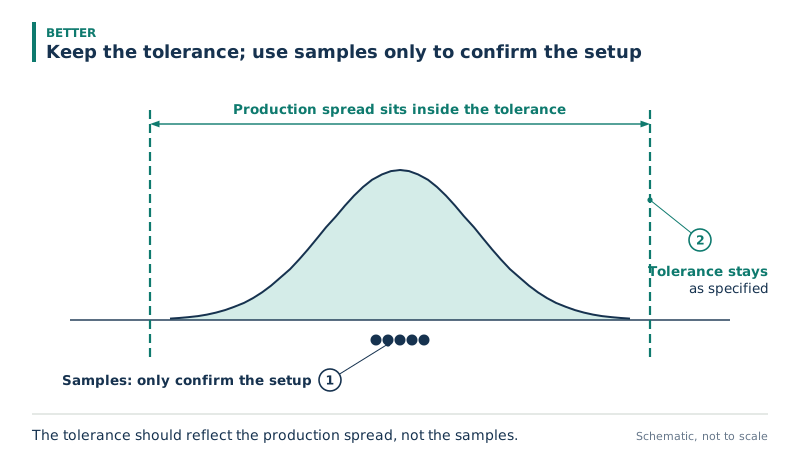
Not on the strength of samples alone. Samples usually come from one setup, one material lot and one tool, so consistent sizes only show that this setup was right. Production goes through tool wear, new material lots, machine warm-up and batch-to-batch differences in surface treatment, and its spread is normally wider than the samples'. The tolerance should come from the functional need and the process capability. To tighten it, you first need data from production batches.
Why it happens
- A few samples only reflect short-term variation within one setup. They don't show long-term variation from tool wear, material changes and shift changes.
- On parts with a surface treatment, batch-to-batch coating thickness adds to that.
- With the tolerance tightened to the samples, early production may still pass. As batches accumulate, rejects start to appear, and both yield and lead time suffer.
When this applies
- All machined parts. Take extra care with parts that are surface treated or heat treated.
- When tightening is justified: the function really needs it, and data from several production batches shows the process can hold it. Check at the same time that the measuring method can resolve differences that small.
- When the function needs it but the process cannot hold it: change the process route (for example, add grinding). Don't just change the number on the drawing.
Basis for the numbers
- No specific values are given here.
- "Production spreads wider than samples" is general experience. How much wider depends on the part, the process and the batch size.
Other ways engineers ask this
- My samples all came out mid-tolerance. Can I set the tolerance to the range of the samples? Not recommended. The sample range is the result of one setup, and production will spread wider.
- Why can the samples hold it when production can't? Samples haven't been through tool wear, new material lots and batch differences in surface treatment. Production adds all of those.
- How much data do I need before tightening a tolerance? There is no fixed part count. It should cover several production batches, including material and tool changes, before the real spread of the process shows.
AnvilQ gives design engineers manufacturability feedback on machined parts, so questions like this come up before the drawing goes out for quotation.
Get started